Field Notes from the Northern Forest
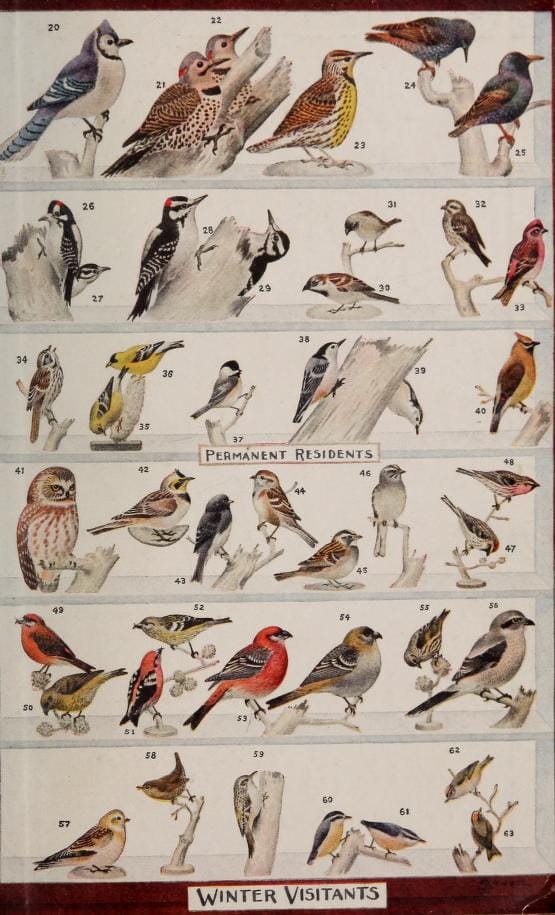
Field Notes From the Northern Forest, by Curt Stager, illustrations by Anne E. Lacy. $22.95. North Country Books.
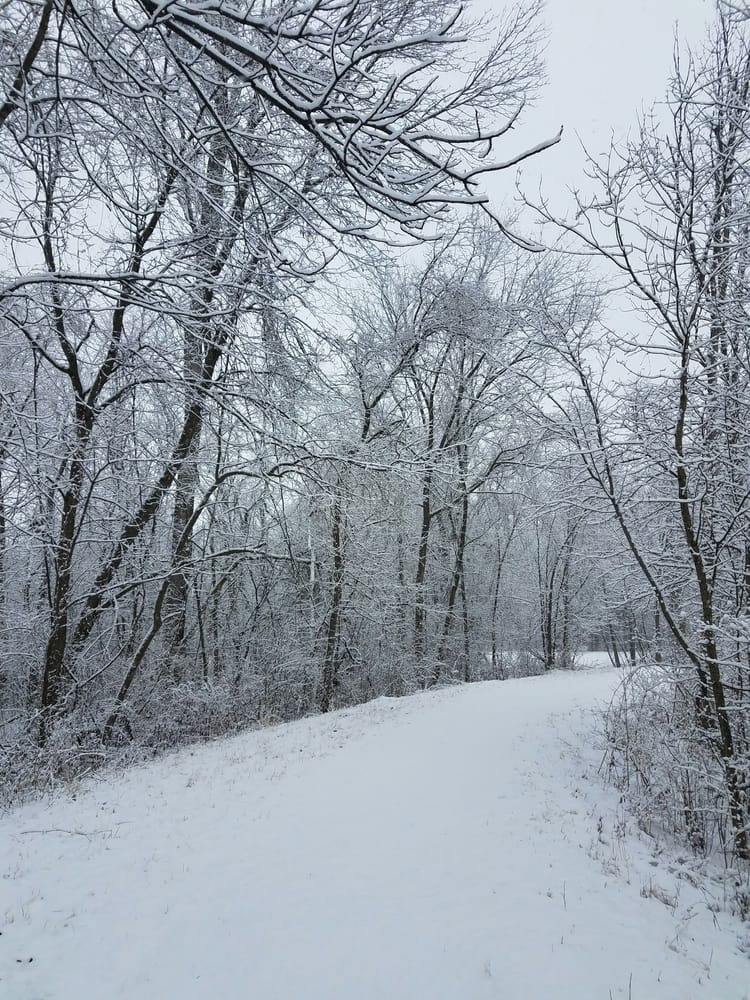
It's a late January afternoon and the mercury has topped out at 23F. I'm seated at my perch by the westward-facing bay window with the fire crackling and a steamy mug of tea on my side table. It's hard to focus on the task at hand--this review--because the gigantic birdfeeder hanging on the naked Japanese maple is overrun with chickadees the size of fluffed-up golf balls whose rapid "chicka-dee-dees" reach here behind the panes of (bird-proofed) double-hung glass. Several brilliant cardinals vie for space on upper branches like so many Christmas ornaments dyed Red 40. The black and gray squirrels do not deter the avians. An occasional Northern Flicker, however, briefly scatters the scrum. Rather than write, I fritter away the remaining daylight watching this spectacle unfold. My cats do, too, though harboring more sinister daydreams, I'm sure.
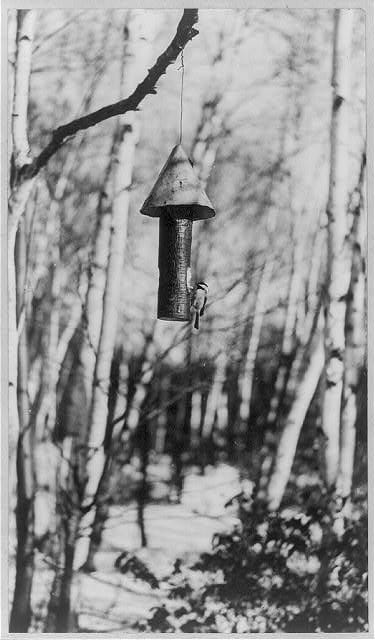
Throughout the winter whenever my feeder nears even halfway empty, I rush to refill the stores. I am convinced the birds know who I am, and once after an hour of waiting (some might say in an attempt to avoid a deadline) successfully fed a titmouse out of hand. Always at hand are a pair of Nikon binoculars as well as Reader's Digest’s Book of North American Birds. The Cornell Bird Id enjoys place of prominence on my phone.
As I learned in Curt Stager's recently published series of essays, I am not alone in my obsession. Sixty-five million Americans maintain birdfeeders, which equals roughly one billion pounds of seed annually. A professor of natural studies at Paul Smith's College in the Adirondacks of Upstate New York, Stager has also hosted a weekly radio program at North County Public Radio since 1990, where he and co-host Martha Foley riff on topics concerning the natural world of the 20-million-acre Northern Forest that blankets Upstate New York, Vermont, New Hampshire, Maine, and Canada. This volume builds on those episodes.

Organized by season, the essays in this 257-page paperback create a natural vehicle for encouraging readers to browse as they engage with their own outdoor spaces. Anne E. Lacy's pen and ink illustrations accompany the text, lending an old-fashioned naturalist's journal feel to the volume.
Stager has studied the natural world for decades; the writing here weaves his knowledge of the birds and the bees in a warm invitation to lace up your boots and get outside. “Let’s step outside the screen door into the May sunshine,” Stager writes in “Small Worlds,” a work that asks the reader to reconsider the world from other, smaller, perspectives. “Go to your lawn. Let things come to you unbidden, and pay attention to whatever arises. Maybe, sooner or later, you will actually see a bee-fly. But even if you do not, you will still get caught up in whatever is going on at the moment and learn things you would not have learned otherwise.”
For example, “Natives” examines what it means to be an invasive species and what, at this point in history, it means to “rewild” an ecosystem. “We have argued about whether we should reintroduce timber wolves into these parts or stock certain lakes with trout. It is all part of living in a place that is neither pure wilderness nor farm nor town alone, but a combination of many places, a landscape with many faces and moods.” Stager finds arguments in favor of returning an environment to a “natural” state are overly simplistic: “let’s get rid of these immigrant trash fish,” he imitates before pointing out the danger in following this argument to its logical conclusion: if nothing is native, nothing is invasive, and therefore the natural order should be, by default, constant change. Stager does not ignore that much of the recent change is rapid and man-made, but slyly avoids providing an answer. We’ve all got to share the same space, so perhaps the best path forward is to focus on the future rather than on “who or what got here first.” The writing here and even in the more science-specific essays remains conversational; these could easily be robust transcripts from Stager’s radio series. And that’s not a dig; nature writing can easily become overwrought, overly sentimental, or, if science is involved, too detached. Stager’s work is none of that, but rather brims with his enthusiasm. His knowledge is self-evident.
At my feeder, I observe my visitors with fresh perspective. As the chickadees swoop in to politely grab one seed from the feeder to enjoy on a protected bough, I wonder what it takes to endure these Arctic temperatures as these downy puffs do. The touchdown of a hawk has just dispersed the crowd, and as the creatures take shelter I am reminded of my own cherished childhood dreams of flight and what it might be to rush skyward to save my skin in another unexpected gift from Stager’s Notes.