Nothing Precious
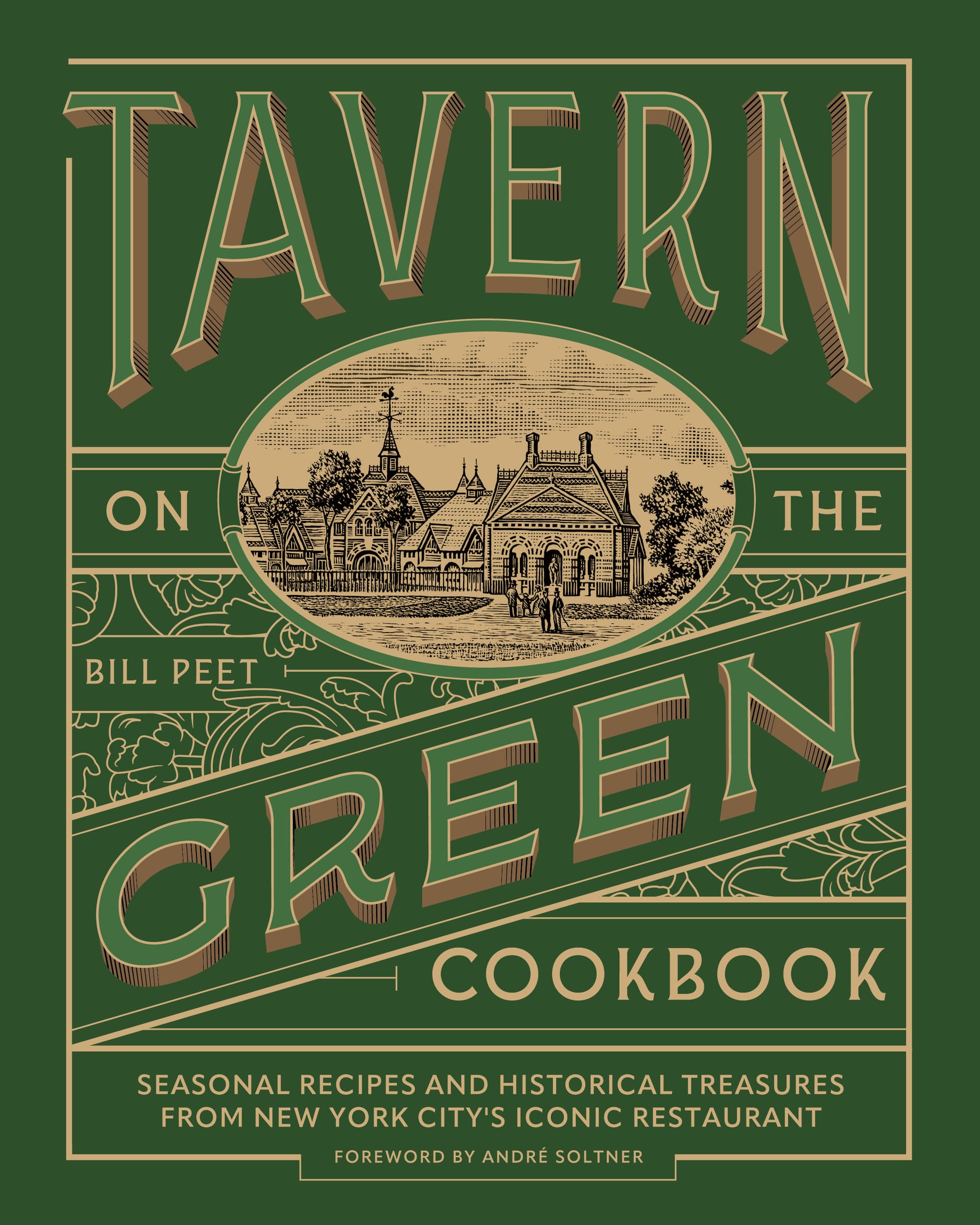
Tavern on the Green Cookbook: Seasonal Recipes and Historical Treasures from New York City's Iconic Restaurant
Bill Peet
Foreword by André Soltner
Globe Pequot | April 2026 | 368 pages | $39.95 | Hardback
I remember my sole visit to Tavern on the Green, vaguely. It was the ungodly depths of summer, sometime in the mid-nineties. My parents had dragged my sister and me out of barely air-conditioned slumber outside Worcester, Massachusetts, at some pre-dawn hour to haul us to Manhattan. Was my father interviewing subjects for his book? Was he being interviewed for his book? Maybe there was an antiquarian rare books auction he had to cover. I’m foggy on the details surrounding the why, though I do vividly remember the heat—stifling, oppressive, and rank. I did not know until that day that heat had a smell, and in New York, it seemed equal parts overflowing diaper and taco meat. Certainly not the scents to entice someone to sit down to a fancy midday meal.
But my parents must have had a very good day, whatever the reason for our visit, and before making the three-hour or so trek back home, we found ourselves in Central Park, seated in what I believe to have been the Crystal Room, studded with chandeliers and Chiclet-white furniture beaming beneath the abundant sunlight pouring in from floor-to-ceiling windows. It was a wonderland meant to dazzle every sense, but don’t ask if I remember my meal—I most certainly do not, though I’m sure it was 95-97% French fries and a chocolate milk. Maybe the trip was wasted on such youth, but the space left an impression on me that I still recall over thirty years later.
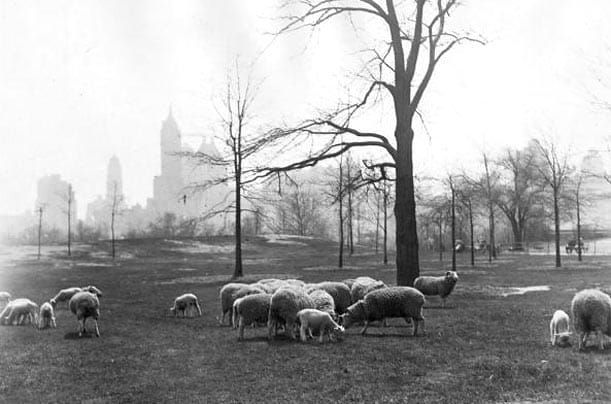
The building started as a Gothic revival sheepfold in 1880, designed by Frederick Law Olmsted’s second in command, Calvert Vaux, and housed over two hundred Southdown sheep grazing in what’s still called Sheep Meadow. None other than urban planner Robert Moses turned the old sheep’s home into a restaurant in 1934 when he banished the ruminants to Brooklyn during a larger renovation of the Park. Forty-two years later another businessman, Warner LeRoy, lavishly renovated it into the city hot spot. By the 1990s its fame began to outpace the product; in a December 1995 review, Ruth Reichl of the New York Times complained that, despite excellent presentations of “ jazzy smoked tomato remoulade” and luxurious “foie gras sauteed with pears,” she feared that “it would take a magician to make food good enough to overcome the service at Tavern on the Green.” Rude waitstaff certainly didn’t stop hordes of out-of-towners like my family from queuing up for the experience anyway.
The closing of the Tavern on the Green in 2009 seemed the sad but not unexpected coda to a restaurant where the city’s beau monde was known to drink, dine, and dance until the sun came up. The financial crisis, coupled with massive outstanding debt, forced the owners to close the restaurant and auction all its contents, including the extravagant Baccarat crystal chandeliers, Tiffany-stained-glass windows, and samovars brought over from LeRoy’s other storied Manhattan restaurant, The Russian Tea Room. After nearly a century, America’s highest-grossing restaurant went dark.
But restaurateur Jim Caiola still believed there was a spark left in the place. His partner, David Salama, wasn’t quite sold on the idea right away. “I looked at it and thought, no way.” Salama says in the Tavern on the Green Cookbook. “The woodwork was rotted, the slate roof had come down, there were cables all over the place….The original flooring was destroyed, there were leaks everywhere, odors, the carpet, the decor—everything—was rotted and smelled. I told Jim it would be cheaper to blow the place up.” But they didn't, and instead — in Salama's words — set out to "make the space feel like it had always been there." No throw pillows. Nothing precious. Executive Chef Bill Peet was tapped to bring his thirty-five years of experience, most notably as sous chef and pastry chef at Andre Soltner’s greatly missed Lutèce. Peet brought French savoir-faire to a quintessentially American restaurant, and since its reopening in 2014, the Tavern on the Green is once again welcoming diners to enjoy a little bit of whimsy hidden in the city.
The sheep barn became a fantasy palace became a ruin became something honest again. And the cookbook documents that honesty. Organized by month, each chapter explains what’s happening at the Tavern at that time of year: January is a time, naturally, for warming up to simpler fare after a season of merrymaking, while August’s summertime menu focuses on beachy favorites like Maine Lobster Rolls and magenta-hued Watermelon Gazpacho. You’re cold in March? There’s a soup for that! Chicken Vegetable, as it turns out, is quite doable in a home kitchen. (The “secret” ingredient—as is often the case when brightening up a dish—is lemon.) A cavil: when I make soup, I make a lot of it. Enough to portion out and freeze for days I’m feeling lazy and a perfect dinner means a crisp pinot grigio and treasure soup discovered in the confines of my freezer. These recipes make only 4 to 6 servings, so plan on doubling or tripling if you’re anything like me.
The hardest part of preparing the unassumingly titled New York-style cheesecake with raspberry coulis was waiting 3 hours for the cake to set without being tempted to nibble on the buttery graham cracker crust. Make it; it will not last long in your fridge. I have a personal stake in the veggie burger—my kid eschews meat—and in so many renditions, it is a soggy mess or lacks enough structure to be called anything other than a vegetable sauté. Originally meant to make use of leftover “bits and pieces from the refrigerator,” Chef Peet’s mushroom and white bean patty retains its shape thanks to the miracle binding properties of oats and quinoa. Nestled atop a buttery (and, in my home, grilled) brioche bun, this easy-to-prepare gem makes the offerings from the market freezer case pale in comparison.
The recipes here are surprisingly unassuming for a restaurant so associated with the mythology of New York City. And yet what could be more New York than chicken soup and cheesecake? Nothing here will make a cookbook author weep with envy. But maybe that's the point. The Tavern's legendary glamour was never only about the food. It was about chandeliers and Central Park and the feeling that, for an afternoon at least, you were exactly where you were supposed to be.