Why I'm Memorizing a French Poem Again
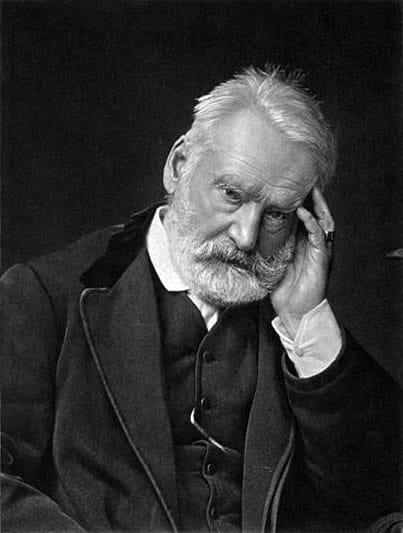
In tenth grade French, I memorized a poem about a father walking to his daughter's grave. As one of Victor Hugo’s most celebrated works, “Demain, dès l’aube” (Tomorrow, at Dawn) reveals a man still grieving the loss of a child four years after her death. And now, thirty-three years later, I’m returning to this poem to see if I can once again commit these twelve verses to memory.
I'm doing this to reclaim some of what makes me human. When I was a middle school French teacher, I assigned my students short poems to memorize over the course of a week. Students always groaned. Several would fail. This was over fifteen years ago, well before AI infiltrated juvenile brains and made memory feel obsolete. But assign I did, because once a poem was memorized, it was yours, tucked in the far recesses of your mind to be recalled in moments of fear or boredom.
We don't have too many occasions to be bored or to challenge our brains these days— we have constant stimulus and instant access to nearly the whole continuum of human knowledge. An AI can surface a poem in seconds, but it can't know what it means to lose someone, or to read a father's grief as a fellow parent. Memorization, not retrieval, is how words touch the soul.
I chose this poem to give myself a leg up—start with something familiar. But when I tried to recite it, only the first line came back. The rest was gone.
With repetition, the poem reappeared in my mind, albeit in fits and starts. Some days, I can recall 8 verses without referring to the text. On others, my mind goes blank and I panic that perhaps I’m not suited to this task.
What started as a brain exercise has, in the doing, revealed something else entirely. The face of a lifelong friend returns to my memory, someone whose death I've avoided grieving for eight years. His ashes sit in my dining room cabinet, waiting to be spread someplace he would have loved. I haven’t done it. I hedge. Maybe I don’t know where he’d like to go? What if I do it wrong? The truth is, they're just ashes. I’m afraid of what happens when he's gone and there’s nothing left for me to tend. Re-memorizing this poem is fortifying me with the strength to finally let go. After he died, I turned to long-distance running, which helps, but it hasn’t been enough.
Hugo was a father in mourning. Now, I'm reading him as a parent and as someone who has lost a loved one too soon. Perhaps I've been blocking myself from digging into the darker stanzas because they nick wounds I don't want to bleed:
Je marcherai les yeux fixés sur mes pensées,
Sans rien voir au dehors, sans entendre aucun bruit,
Seul, inconnu, le dos courbé, les mains croisées,
Triste, et le jour pour moi sera comme la nuit.
I will walk eyes fixed on my thoughts,
Without seeing anything outside, nor hearing any noise,
Alone, unknown, the back curved, the hands crossed,
Sad, and the day for me will be like the night.
After two weeks of consistent practice, I still can't get through the whole poem, even though I can see each stanza play out in my mind: Hugo walking through the countryside alone, lost in his grief, focused only on wreathing his daughter's grave with heather and holly. But the words don't always come on command.
I've set a goal of March 10, the anniversary of my friend's death. By then, I need to carry these twelve verses in my body—not in my phone, not on a page. If I can hold Hugo's grief, maybe I can finally hold my own. Maybe then I'll know where to scatter those ashes.