The Best Books to Read in March 2026
A pre-Roe novel that stings, an Icelandic elegy to a demolished church, and the lost art of French sign painting.
Where the Girls Were, by Kate Schatz. (Dial Press, 368 pages, $29, hardcover)
What should feel like ancient history doesn't in Kate Schatz's latest novel in which class valedictorian Baker Phillips falls for a charming hippie at a rockin’ New Year’s Eve party at San Francisco’s iconic Fillmore. Totally naive about her own body and the consequences of unprotected sex, Baker discovers after months of a whirlwind romance that she's pregnant. This being 1968, Baker is sent to a home for unwed mothers, where other young women face the same predicament. Schatz offers us unsettling, but unsurprising, stories of girls living in secret shame and no say in what comes next for them or their babies. Set at the start of the sexual revolution but before Roe v. Wade, the novel feels less like a period piece than a warning—a moment that feels far less distant than it should.
A Parish Chronicle, by Halldór Laxness, translated by Philip Roughton. (Archipelago Books, 120 pages, $19, paperback)
In the quiet Mosfell Valley outside Reykjavík exists an ancient parish where it has existed in harmony among few inhabitants and many sheep, even after the Danish authorities ordered its demolition. And so the story ostensibly begins in the 1880s, with the imminent dismantling of the church and the sudden patriotism of one Olafur of Hrisbru, a local farmer who may be a descendant of the heathen poet Egill, whose remains are interred in the church. Alongside him is Big Gunna, a “freewoman” who stubbornly works where she pleases. What happens to this tiny outpost is almost less important than the elegy Laxness composes for his fellow Icelanders in a deft weaving of comedy and prose that neither diminishes nor exalts his countrymen; rather, it is an eccentric and grateful thank you to the place the Nobel Prize winner called home.
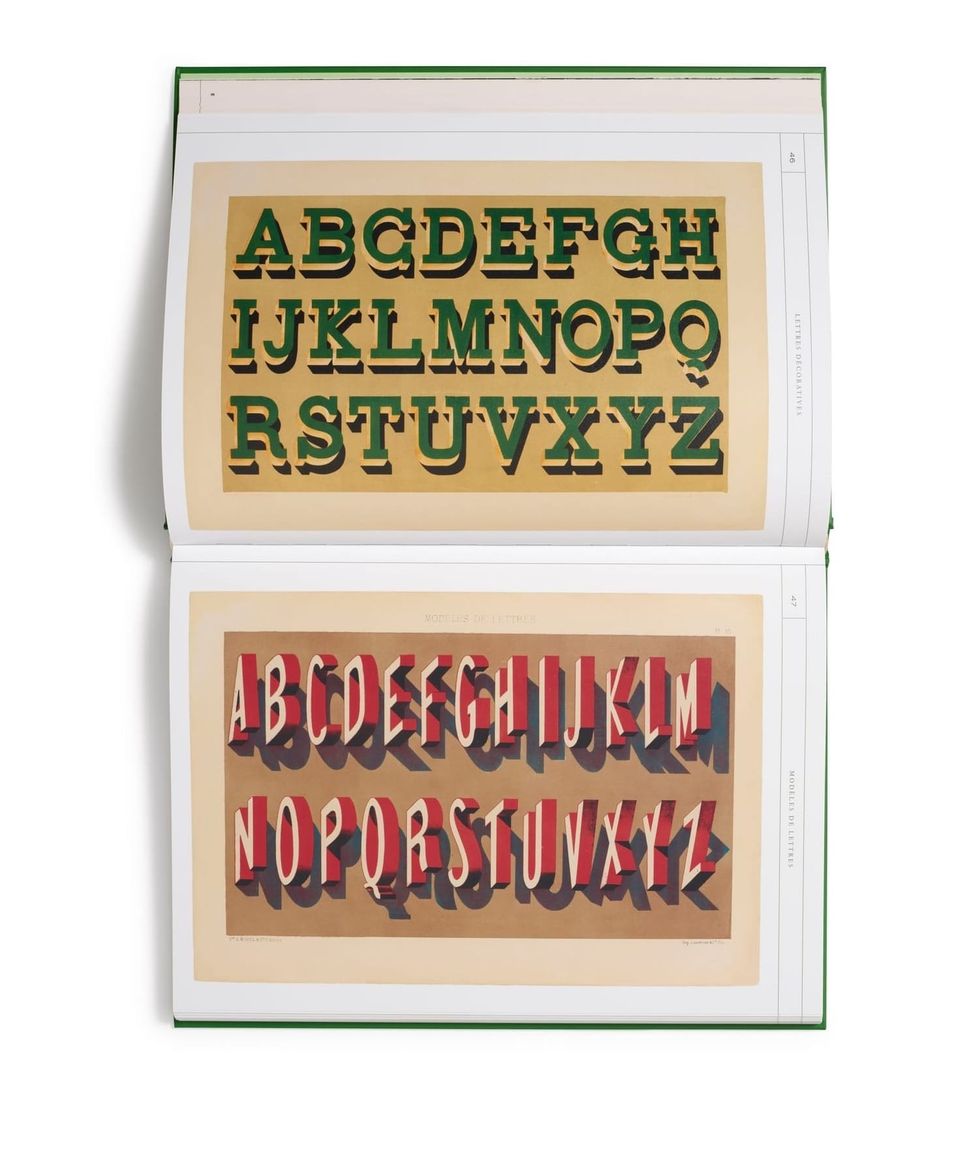
Lettres Décoratives: A Century of French Sign Painters’ Alphabets, introduction by Morgane Côme. (Letterform Archive, 216 pages, $65).
What is the purpose of a sign? To inform, certainly, but in the case of commercial displays, to seduce passerby to part with their money. And leave it to the French to turn to the humble sign and say, “but make it fashion.” Throughout the late nineteenth and early 20th centuries, sign painters came to enjoy a prestige on par with traditional artists, and entire schools were established throughout France to teach the skills of the trade. Training exercises included painting complete alphabets in a dizzying array of styles from monumental lettering capped with triangle-shaped serifs to the art nouveau-styles often associated with the Paris Metro. The staff at San Francisco-based Letterform Archive raided their stacks and discovered a dozen oversize French portfolios filled with these colorful and enchanting letterforms. Bound in clover green, this oversize volume preserves one hundred and fifty bold full-color plates of alphabets—a visual record of a craft that cheap vinyl lettering rendered nearly obsolete by the 1990s. These curlicues and serifs, however, remain preserved here like exquisite specimens of an endangered species.
(Photo courtesy Letterform Archive)